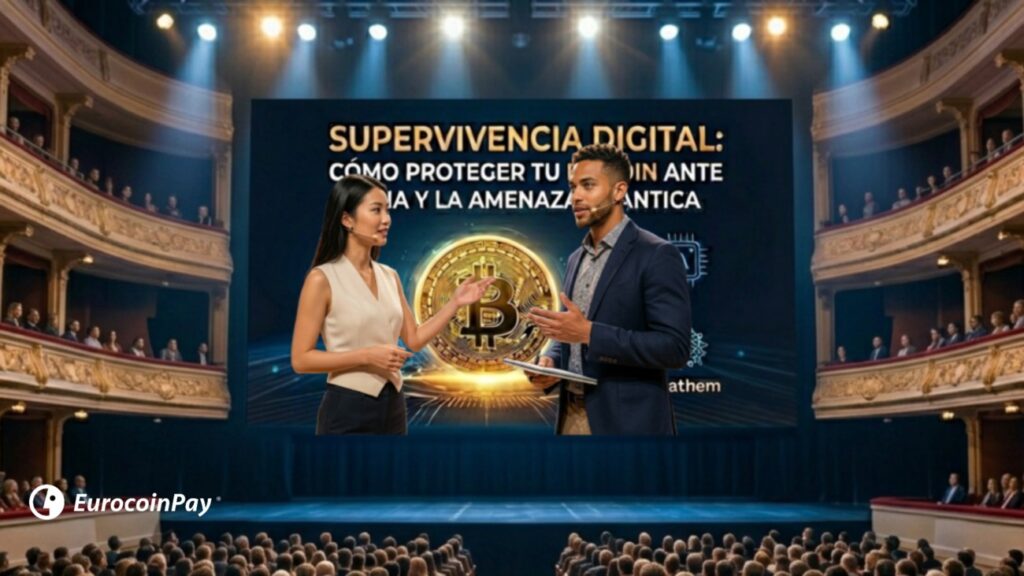
How to Protect Your Bitcoin from AI and the Quantum Threat
In the crypto world, technology advances faster than our ability to keep up with it. Two major storm clouds are looming on the Bitcoin horizon: advanced artificial intelligence (capable of autonomously identifying code vulnerabilities) and quantum computing (a long-term technical threat). This article is not intended to cause panic, but to help you understand how to act when the rules of the game change.
Bitcoin is often compared to ‘digital gold’, but its security relies on cryptographic principles that now face new technological challenges.
Although AI and quantum computing are often grouped together as ‘threats’ to Bitcoin, their impacts and timescales are fundamentally different.
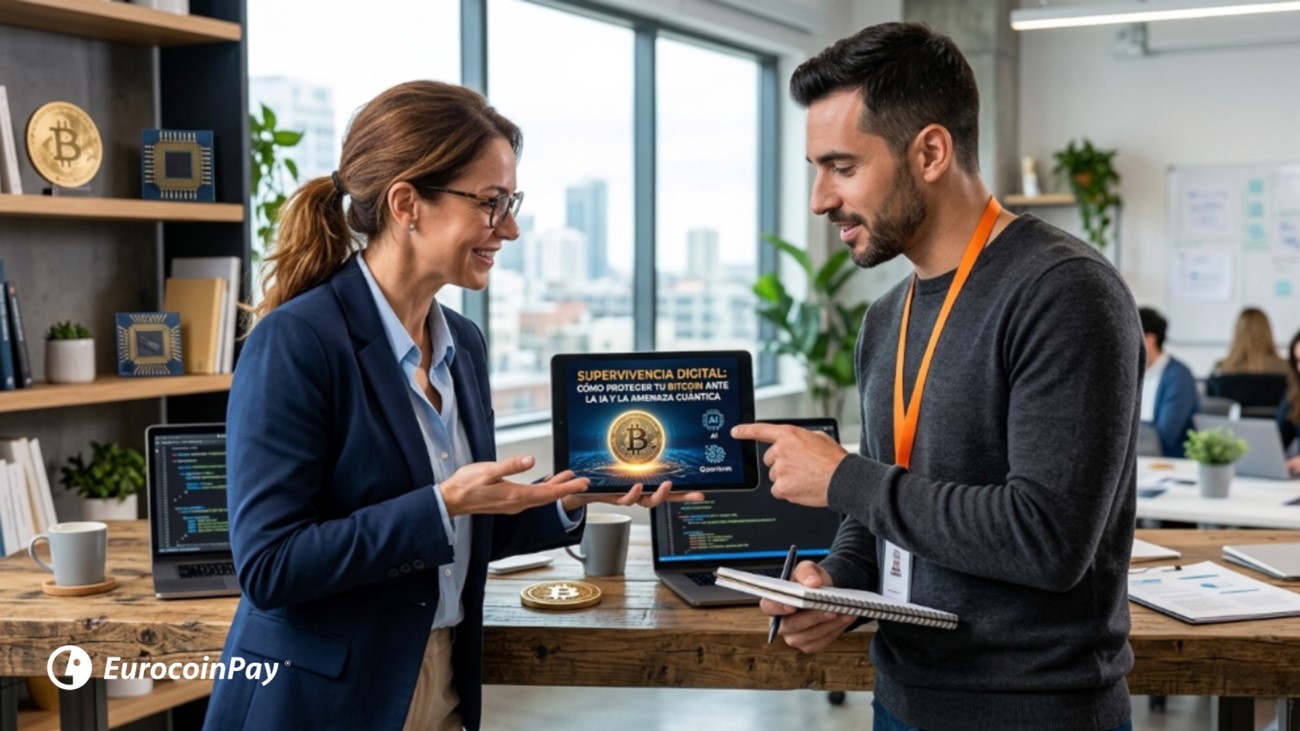
The Imminent Danger: AI and the Exploitation of Vulnerabilities
Recently, advanced models such as Claude 3.5/Opus/Sonnet o GPT-5 have demonstrated a disturbing ability to detect flaws in smart contracts and blockchain protocols. Unlike a human hacker, an AI can scan millions of lines of code in seconds to find weaknesses.
It is not a question of AI ‘breaking’ Bitcoin, but rather of attackers using these tools to drain protocols, bridges or smart contracts where users have their funds locked up.
AI is not a direct threat to Bitcoin’s security (it cannot ‘break’ the encryption), but it is transforming its ecosystem; here are three examples of how it is doing so:
1.- Mining optimisation based on AI algorithms that improve the energy efficiency of mining rigs.
2.- Continuous market analysis of how AI is changing the way investors interpret volatility and market sentiment.
3.- Cybersecurity through the use of AI to detect vulnerabilities in wallets or prevent phishing attacks against users.
The quantum threat: A real danger?
This is where we must address the ‘elephant in the room’.
The risk posed by quantum computing, via Shor’s algorithm, has the theoretical potential to break the elliptic curve encryption that protects Bitcoin’s private keys.
In reality, we are a long way from having a quantum computer with sufficient capacity (stable qubits) to decrypt a real wallet.
Bitcoin is not static. The community is already considering soft forks or upgrades to post-quantum cryptography (quantum-resistant).
The risk is ‘silent’. An attacker could be collecting data from old transactions today (exposed public keys) to decrypt them once quantum technology is powerful enough.
Defence Protocol: User Action Guide
If the ecosystem faces a crisis, here is what you should bear in mind to protect your assets:
1º- Proactive Migration to Modern Addresses: If you hold funds in old addresses (P2PKH), consider moving them to newer formats (such as SegWit or Taproot). These formats offer additional layers of security and obfuscation of the public key until the moment of the transaction.
2º- Do not reuse addresses: Every time you reuse an address, you expose your public key to the world. In a quantum threat scenario, this is like leaving your keys in the door. Use a new address for each receipt (privacy best practice).
3º- Cold storage and self-custody: Avoid leaving large amounts on exchanges or DeFi protocols that rely on complex smart contracts. If AI finds an exploit in a DeFi protocol, your funds could vanish in seconds. Cold storage (an offline hardware wallet) is your best safeguard.
4º- Pay attention to network updates (Soft Forks): If the Bitcoin community decides to implement a security update (post-quantum cryptography), make sure you stay informed via official sources and only update your software from verified repositories.
Which is more harmful?
Whilst quantum computing poses a long-term structural risk (technical and binary: either it breaks or it is protected), AI poses a short-term operational risk (improvements in scams, identity theft and centralisation of mining).
Quantum computing is the ‘existential’ (theoretical) threat, but AI is the catalyst that could change the day-to-day dynamics of Bitcoin usage.
Neither AI nor quantum computing has a ‘shutdown’ button for Bitcoin, but they can force users to change their habits. Security in the age of AI is no longer a passive option; it requires us to be active users, aware of where we store our assets and how we interact with the code.
Disclaimer: The information set forth herein should not be taken as financial advice or investment recommendation. All investments and trading involve risk and it is the responsibility of each individual to do his or her due diligence before making a decision.
Original images from EurocoinPay, designed by humans using artificial intelligence.
This article was written using a combination of human and AI-generated content.