The Cryptographic Passport
Blockchain Identity and the End of Traditional KYC
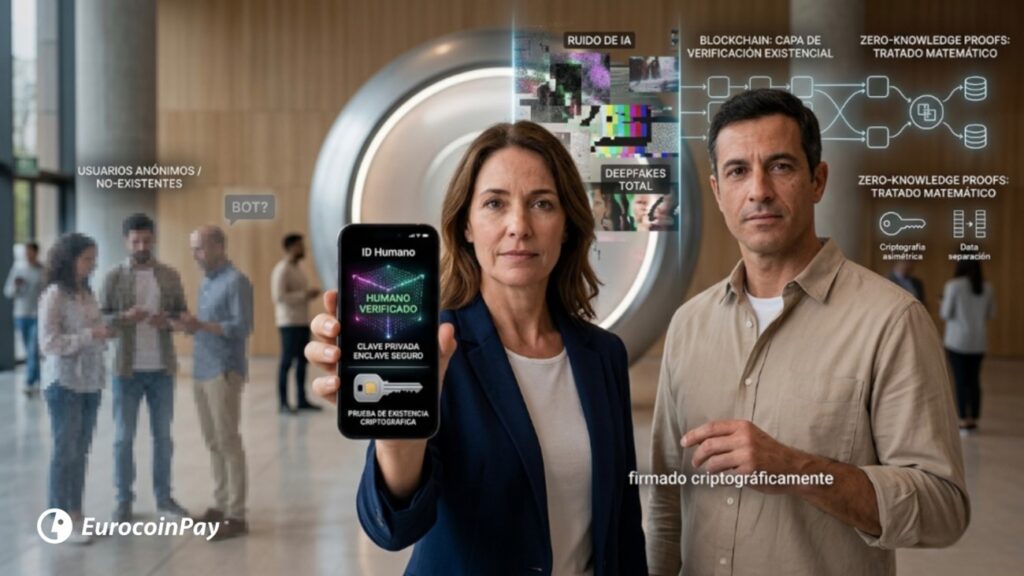
In today’s digital ecosystem, proving who we are has become a slow, invasive and, paradoxically, insecure process. Handing over copies of our documents to every platform we use creates honeypots of personal data waiting to be hacked. However, we are on the cusp of a paradigm shift: blockchain-based Self-Sovereign Identity (SSI).

Your Identity as an Asset in Your Wallet
Blockchain identity is not about recording your personal data on a public chain (which would be privacy suicide), but about using Decentralised Identity (DID).
In this model, you own an ‘identity wallet’ that contains verifiable credentials issued by trusted entities (such as a government or institution). When a service asks you to identify yourself, you do not hand over your documents; you simply authorise a cryptographic verification. Responsibility and control are returned to the individual..
The ‘Superpower’ of Zero-Knowledge Proofs (ZKP)
For this identity to be truly private, Zero-Knowledge Proofs cryptography comes into play. This technology allows you to prove that a statement is true without revealing the information that supports it.
- THE EXAMPLE OF LEGAL AGE: Today, to join an exchange, you send a photo of your ID showing your name, address and exact date of birth. With ZKP, your wallet generates a mathematical proof that answers ‘YES’ to the question ‘Is this user over 18 years old?’.
- SELECTIVE PRIVACY: The exchange obtains the legal certainty it needs, but never sees your name or date of birth. The requirement is verified, not the data.
The KYC Revolution: From Days to Milliseconds
The integration of these two concepts transforms regulatory compliance into a competitive advantage:
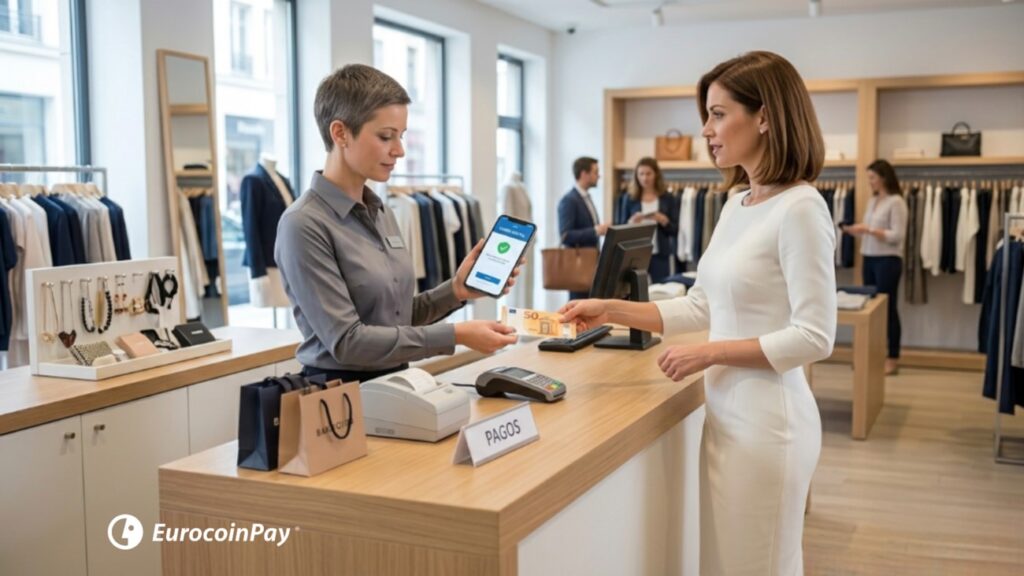
- Absolute Immediacy: As it is a code validation and not a human review of blurry photos, KYC occurs in milliseconds. Moving from one platform to another is as simple as clicking ‘connect’.
- No More Repetition: You won’t have to do 20 different KYCs. You do a one-time validation on your blockchain identity and reuse it on any protocol, always maintaining control over what data you share.
- Immunity to Data Hacks: Exchanges no longer need to store folders full of scanned passports. If the platform suffers a security breach, the attacker will not find sensitive personal data, simply because the exchange never had it in its possession.
Benefits and Challenges of the New Model
Like all disruptive technologies, blockchain identity has two sides:
- Benefits: We gain real digital sovereignty, reduce identity fraud, and eliminate bureaucratic friction in the financial world.
- Drawbacks and Responsibility: Losing the private keys to your identity could mean a digital ‘erasure’ that is difficult to recover without social custody systems. Furthermore, for anonymity purists, this system definitively links activity on the chain to a legal identity, ending the pseudonymity of Bitcoin’s early days.

Conclusion: Towards Invisible Compliance
The future does not point to the disappearance of verifications, but rather to their invisibility. Blockchain identity, powered by ZKP, allows users to maintain their anonymity vis-à-vis companies while complying with the law before regulators.
We are moving from a system based on ‘trusting papers’ to one based on ‘verifying mathematics’. The result will be a crypto environment where user security and operational speed finally go hand in hand, giving us back ownership of the most valuable thing we have on the network: who we are.
Disclaimer: The information set forth herein should not be taken as financial advice or investment recommendation. All investments and trading involve risk and it is the responsibility of each individual to do his or her due diligence before making a decision.
Original images from EurocoinPay, designed by humans using artificial intelligence.
This article was written using a combination of human and AI-generated content.